

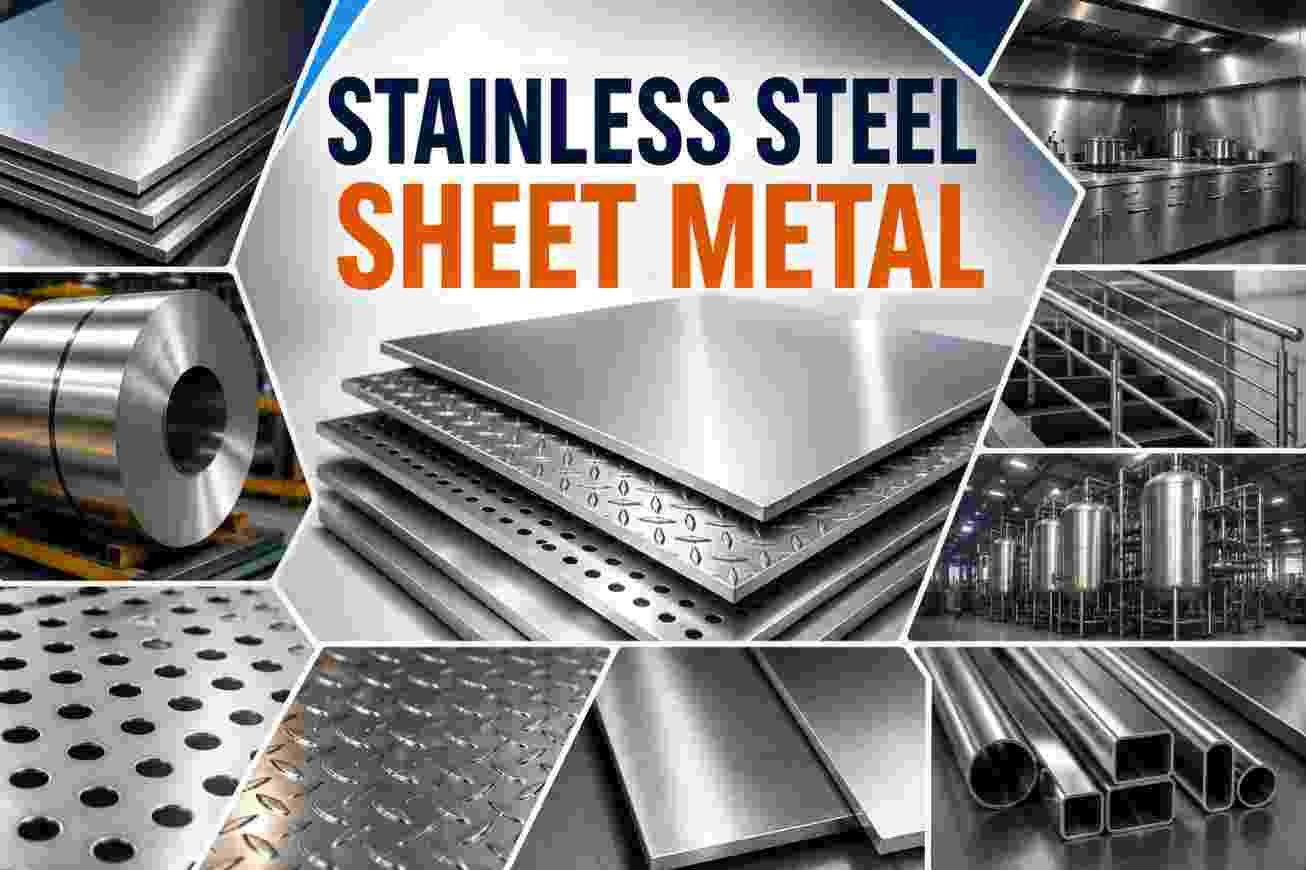
Stainless Steel Sheet Metal: Types, Grades, Uses, Benefits and Buying Guide
Table of Contents
ToggleIntroduction
When strength, durability, corrosion resistance and a clean appearance matter, stainless steel sheet metal is one of the most versatile materials available. It is used in everything from kitchen appliances and architectural interiors to industrial equipment, automotive components and commercial construction.
But not all stainless steel sheets are the same. Different grades, thicknesses, finishes and manufacturing processes make each sheet suitable for different applications.
Whether you are a homeowner, fabricator, contractor, designer or business owner, understanding stainless steel sheet metal can help you choose the right material, avoid unnecessary costs and achieve better long-term performance.
In this guide, we will explain stainless steel sheet types, grades, thicknesses, finishes, applications, advantages, disadvantages and buying considerations.
What Is Stainless Steel Sheet Metal?
Stainless steel sheet metal is a flat, thin metal product manufactured from stainless steel and produced in various thicknesses, sizes and surface finishes.
Stainless steel is primarily an iron-based alloy containing chromium. The chromium helps form a passive protective layer on the surface, giving stainless steel its well-known resistance to corrosion.
Depending on the grade, stainless steel may also contain elements such as nickel, molybdenum, manganese and carbon. These additions influence properties such as strength, corrosion resistance, formability and heat resistance.
Stainless steel sheets can be cut, bent, punched, welded and fabricated into a wide range of products.
Why Is Stainless Steel Sheet So Popular?
The popularity of stainless steel comes from its combination of performance and appearance.
Some important advantages include:
- Excellent corrosion resistance
- High strength
- Long service life
- Attractive appearance
- Easy cleaning
- Good heat resistance in suitable grades
- Recyclability
- Low maintenance
- Excellent fabrication possibilities
Unlike painted carbon steel, stainless steel does not depend on a conventional paint coating for its basic corrosion resistance.
However, choosing the correct grade is still important because different environments can require different levels of corrosion resistance.
Common Stainless Steel Sheet Grades
Choosing the right stainless steel grade is one of the most important decisions when purchasing sheet metal.
304 Stainless Steel Sheet
304 stainless steel is one of the most widely used grades.
It offers good corrosion resistance, formability and weldability, making it suitable for many general-purpose applications.
Common uses include:
- Kitchen equipment
- Food-processing equipment
- Sinks
- Architectural applications
- Railings
- Interior panels
- General fabrication
For many everyday applications, 304 stainless steel provides a good balance between performance and cost.
316 Stainless Steel Sheet
316 stainless steel contains molybdenum, which improves resistance to certain corrosive environments compared with 304.
It is often selected for applications exposed to:
- Marine environments
- Chlorides
- Chemical processing
- Pharmaceutical equipment
- Coastal conditions
Although 316 can cost more than 304, its enhanced corrosion resistance can make it worthwhile in demanding environments.
430 Stainless Steel Sheet
430 is a ferritic stainless steel commonly used where moderate corrosion resistance and appearance are required.
It is frequently found in:
- Kitchen appliances
- Decorative applications
- Automotive trim
- Interior components
The choice between 304, 316 and 430 should be based on the environment and performance requirements rather than price alone.
Stainless Steel Sheet Thickness
Stainless steel sheet thickness is another important consideration.
Thin sheets are useful for applications where weight and easy forming are priorities, while thicker sheets are preferred where greater rigidity or structural strength is required.
The appropriate thickness depends on:
- Application
- Load requirements
- Fabrication method
- Required stiffness
- Welding process
- Installation method
- Budget
Instead of selecting thickness solely by appearance, consider how the sheet will be used and supported.
Stainless Steel Sheet Finishes
The surface finish can dramatically change the appearance and performance of stainless steel.
2B Finish
A common smooth, reflective industrial finish used in many general applications.
No. 4 Finish
A brushed finish that is popular for architectural and decorative applications.
BA Finish
Bright annealed stainless steel has a highly reflective appearance and is often selected where a polished look is desirable.
Mirror Finish
Mirror-finished stainless steel provides a highly reflective surface and is often used for decorative interiors, architectural features and design applications.
The right finish depends on whether your priority is appearance, ease of maintenance, scratch visibility or a specific design style.
Applications of Stainless Steel Sheet Metal
Stainless steel sheet is used across numerous industries.
Construction and Architecture
Architects and contractors use stainless steel for:
- Wall cladding
- Elevator interiors
- Handrails
- Decorative panels
- Roofing components
- Kitchen installations
- Architectural features
Its modern appearance makes it especially popular in contemporary buildings.
Food and Beverage Industry
Stainless steel is widely used in food-processing environments because many grades offer good corrosion resistance and are relatively easy to clean.
Applications include countertops, processing equipment, storage equipment and commercial kitchens.
Automotive Industry
Stainless steel sheet can be used in exhaust components, trim, brackets and other specialised automotive applications.
Industrial Equipment
Industrial manufacturers use stainless steel for tanks, enclosures, machinery components, processing equipment and fabricated assemblies.
Home and Interior Design
Stainless steel is commonly used for kitchen backsplashes, sinks, countertops, shelves, appliances and decorative panels.
Stainless Steel Sheet vs Stainless Steel Plate
The terms stainless steel sheet and stainless steel plate are often used interchangeably by casual buyers, but they can refer to different thickness categories depending on industry standards and supplier practices.
Generally, thinner flat products are referred to as sheet, while thicker products are commonly classified as plate.
Because terminology can vary by supplier and standard, always confirm the exact thickness rather than relying only on the product name.
Stainless Steel Sheet Metal Fabrication
One reason stainless steel sheet is so useful is its ability to be fabricated into different shapes.
Common fabrication processes include:
- Laser cutting
- CNC cutting
- Shearing
- Bending
- Punching
- Rolling
- Welding
- Polishing
- Brushing
Fabrication requirements depend on the grade and thickness.
For example, the tools, forming methods and welding procedures used for a particular stainless steel grade may differ from those used for another grade.
Advantages of Stainless Steel Sheet Metal
Corrosion Resistance
The primary advantage is its resistance to corrosion in many environments.
Durability
Stainless steel can provide a long service life when correctly specified and maintained.
Hygiene
Its smooth surfaces can be relatively easy to clean, making appropriate grades useful for kitchens and food-processing environments.
Appearance
Stainless steel offers a modern, professional appearance that works well in both industrial and architectural settings.
Low Maintenance
It generally does not require regular painting to maintain its basic corrosion resistance.
Sustainability
Stainless steel is highly recyclable, which can contribute to more sustainable material cycles.
Disadvantages to Consider
Stainless steel is not perfect for every application.
Potential disadvantages include:
- Higher initial cost than some carbon steels
- Surface scratches can be visible
- Some grades perform poorly in specific corrosive environments
- Fabrication may require specialised tools and skills
- Certain finishes require careful cleaning
- Chloride exposure can cause problems for unsuitable grades
The solution is not necessarily to choose the most expensive stainless steel. Instead, select the grade and finish that match the actual environment.
How to Choose the Right Stainless Steel Sheet
Before buying, consider these questions:
Where will it be used? Indoor, outdoor, coastal, chemical or food-processing environments may require different grades.
What thickness is required? Consider load, stiffness, forming and installation.
Which grade is appropriate? Compare corrosion resistance, strength, formability and cost.
What finish do you need? Choose between mill, brushed, bright or mirror finishes according to the application.
How will it be fabricated? Cutting, bending and welding requirements can influence material selection.
What quantity do you need? Larger quantities may provide better commercial pricing, depending on the supplier.
Stainless Steel Sheet Price
The stainless steel sheet price can change frequently because it depends on factors such as:
- Stainless steel grade
- Sheet thickness
- Sheet dimensions
- Surface finish
- Market conditions
- Quantity
- Supplier
- Fabrication requirements
Therefore, it is better to request a current quotation based on the exact grade, thickness and size rather than relying on a generic price per kilogram or sheet.
Final Thoughts
Stainless steel sheet metal combines durability, corrosion resistance, attractive appearance and fabrication flexibility, making it an important material for construction, manufacturing, architecture, kitchens and industrial applications.
The most important step is choosing the right product for the job. Consider the stainless steel grade, thickness, surface finish, environment and fabrication requirements before purchasing.
For general applications, 304 is a widely used option. For more demanding corrosive environments, 316 may be more appropriate, while other grades such as 430 can be useful for specific applications.
Don’t choose stainless steel based on price alone. The right material can deliver better durability and lower maintenance costs over its service life.
Frequently Asked Questions
Ques:-What is stainless steel sheet metal used for?
Ans:-It is used for kitchen equipment, architectural panels, industrial machinery, food-processing equipment, appliances, automotive components, railings, countertops and many other applications.
Ques:-Which stainless steel sheet is best?
Ans:-There is no single best grade. 304 is a common general-purpose choice, while 316 is often selected for more corrosive environments. The appropriate grade depends on the application.
Ques:-Is 304 stainless steel better than 316?
Ans:-Neither is universally better. 316 generally offers improved resistance to certain corrosive environments, while 304 is widely used for general applications and can be more economical.
Ques:-Does stainless steel sheet rust?
Ans:-Stainless steel is highly corrosion-resistant, but it is not completely immune to corrosion. The risk depends on the grade, environment, surface condition and maintenance.
Ques:-Can stainless steel sheet be welded?
Ans:-Yes. Many stainless steel grades can be welded, but the correct welding procedure depends on the specific grade, thickness and application.